














Ant Control and Identification Auckland
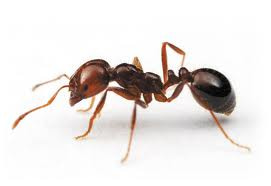
Ant and termite identification are similar, with a few differences outlined below.
Household Ant Identification
Ants are close relatives of bees and wasps. They are common insects that are effortlessly identified, especially in their common wingless adult forms. However, winged-type ants abandon the nest in large numbers during warm conditions to mate and create new colonies. They are often mistaken for winged termites, leaving the nest to mate.
The following three primary characteristics can distinguish ants and termites:
- An ant’s body is constricted, giving the appearance of a slim waist.
- The ant’s rear wings are smaller than its front wings; the termites’ front and hind wings are the same. Soon after their flights, both ants and termites lose their wings, so branches may not be present at all times.
- Female and worker ants that have wings possess elbowed antennae.
Ant Identification And Complete Metamorphosis
They passed through the egg, larval, pupal, and adult phases. Larvae are immobile, worm-like, and never look like adults. Also, ants are social insects. Queens carry out the colony’s reproductive functions and are more significant than other ants. They lay eggs and, at times, participate in the feeding and grooming of larvae.
On the other hand, sterile female workers will collect food, feed, and look after the larvae. They build tunnels and guard the colony. These workers make up the majority of the territory. Therefore, their only function is to mate with the queens. Because they are few in contrast to the females. Worker ants feed male ants. Males do not engage in ant colony activities.
However, there is no need to worry! Steam n Dry Pest Control Auckland Services provide professional services. We have worked in compliance with the standard of Legislation of Hazardous Substances and are a qualified pest applicator in Bed bug, ant, cockroach, flea, fly, carpet beetle, wasp, spider, dust mite, and rodent control since 1987. West Auckland, North Shore, Eastern Bays, South Auckland, and Hibiscus Coast.
Disinfecting Pest Control Auckland Services
- Bed Bug Control
- Disinfecting Clean
- Flea Control
- Dust Mite Control
- Pest Control
- Carpet Beetle Control
- Mattress Sanitising
Call Steam n Dry Pest Control Auckland Services for Ant Identification and Eradication at 0800 783266.
Updated Last: 05 March 2026 By Emma